How To Make Life Better?

Unlock the secrets of how to make life better. Discover powerful topics of willpower maximization, habit formation, behavior design, and systems over goals to help you create a better life for yourself.
Table of Contents
- Introduction
- Willpower Maximization
- Reduce Friction to Change Behavior
- Make Good Habits Easy: Remove, Replace, Rearrange, Reduce
- Environment Design for Habits: Friction Audit
- Systems Over Goals: Automate Virtue, Constrain Vice
- Recommended Action
- Conclusion
- FAQ
- Support Us
- Author Bio & Social
Introduction
Before you try to increase your willpower, try to decrease the friction in your environment. Most people attack change with grit alone, then wonder why progress slips by Friday. But behavior science, common sense, and the wisdom of the biblical book Proverbs all point the same direction: the path determines the pace. You don’t push a boulder up a mountain when you can simply move the mountain. When you reduce the number of steps, temptations, and decision points between you and the right action, your “discipline” seems to skyrocket—without strain. This article equips you with a clear framework and field-tested tools to engineer defaults and guardrails, where good choices happen by default and bad choices become inconvenient, unattractive, and rare.
Willpower Maximization
Willpower feels noble, but it’s a volatile fuel. Decision fatigue, stress, sleep loss, and emotion all drain it. Hence, to maximize willpower, lets decrease friction—the practical obstacles that make an action easier or harder—works 24/7. Research in behavioral science repeatedly shows that defaults, proximity, and effort cost shape behavior more reliably than raw motivation. Consider three pillars:
- Default Effect: People overwhelmingly accept the pre-set option. This isn’t laziness; it’s efficiency. Align your defaults with your values and you remove dozens of micro-decisions a day.
- Proximity & Effort: What’s within arm’s reach gets used. What requires even a small hassle gets ignored. Adding or removing one step often changes behavior more than a pep talk or a bold resolution.
- Cues & Context: Habits are context-dependent. The same person behaves differently in different rooms because cues trigger automatic scripts. Change the cues, change the script.
There’s also the ongoing debate about willpower depletion, whether willpower is infinite vs finite resource. Regardless of the newest theories, one conclusion stands firm: environmental friction reliably predicts behavior. The BJ Fogg Behavior Model (B=MAP) frames it well: Behavior occurs when Motivation, Ability (ease), and Prompt converge. Reducing friction increases Ability—often the fastest lever to pull.
The great inventor, R. Buckminister Fuller dropped a timeless wisdom to humanity which states “you never change things by fighting the existing reality. To change something, build a new model that makes the existing model obsolete.” Better model = better results.
Reduce Friction to Change Behavior
Think like an engineer. In physics, objects move when force exceeds friction. You can apply more force (motivation), or you can reduce friction (barriers). Reducing friction is durable: it keeps working when feelings change.
Practical examples:
- Health: Prepping your protein shake in advance increases the chances of you drinking it. If the first thing you see is cut fruit and grilled chicken, you’ll eat it. Hide ultra-processed snacks on a high shelf or don’t buy them at all.
- Fitness: Put your gym bag and shoes by the door, ready the night before removes mental barriers like “where are my socks?” Choose a program that starts with 10–15 minutes (low friction), not a heroic 90-minute gauntlet.
- Focus: A single browser extension that blocks distracting sites during work hours turns a hundred “no’s” into one “I already decided.” Reducing friction to focus increases productivity without adding stress.
- Finances: Automate transfers to savings/investments on pay day. Make the virtuous path the default path. I personally setup automatic transfers from my checking account into my Wealthfront account where they automatically invest my money into a worldclass investment portfolio. I’ve made the decision in advance which removes decision fatigue. I’ve automated the investment where I no longer stress about the complexity or risk. You can learn more about my automatic investment system here.
We overvalue immediate comforts and undervalue future benefits, so adding micro-frictions to vices (e.g., a 24-hour wait before one-click purchases) and micro-eases to virtues (one tap to deliver meal to house) nudges us toward wisdom. Friction control is a powerful strategy to implement immediately in our life.
Make Good Habits Easy: Remove, Replace, Rearrange, Reduce
Memorize these four levers and you can re-architect any life domain quickly.
Remove (Eliminate the obstacle entirely)
- Toxic temptations: Don’t store what you’re trying to resist. The easiest calories to avoid are the ones you never bring home.
- Visual clutter: Every item in view is a cue. Fewer cues = fewer urges. Clear surfaces create psychological room for calm action.
- Decision clutter: Standardize recurring choices (breakfast rotation, gym time, morning routine). Fewer choices, stronger habits.
Replace (Swap harmful for helpful)
- Stimulus substitution: Replace doomscrolling with an app that opens to your Bible, breathwork, or a reading queue.
- Snack swap: Replace chips with crunchy carrots and hummus. You still satisfy the oral fixation and crunch but align with your plan.
- Entertainment bundling: Listen to your favorite show only while walking or stretching (temptation bundling). Pleasure now serves progress.
Rearrange (Make the right action the path of least resistance)
- Proximity engineering: Put your guitar on a stand in the living room to practice daily; store the TV remote in another room during work hours.
- Stimulus control: Put your phone charger outside the bedroom. Put your living room tv controller in a shelf. Out of sight = out of mind.
- Zoning: Create “purpose zones” at home: reading nook, prayer corner, stretching mat. Each zone primes a specific behavior.
Reduce (Shrink the step size and the starting friction)
- 2-Minute Rule: Reduce the first step to two minutes—open the doc, tie the shoes, pour water. Starting beats struggling.
- Micro-commitments: Promise five push-ups, not fifty. Momentum compounds; identity locks in.
- Checklists & layouts: Pre-stage tools (water bottle filled, supplements sorted, workout already planned in advance). Friction falls, follow-through rises.
When in doubt, ask: “How can I make the right action obvious, easy, and satisfying—and the wrong action invisible, inconvenient, and costly?”
Environment Design for Habits: Friction Audit
Use this field guide to run a 90-minute friction audit this week.
Home
- Kitchen: Place healthy fruit snacks at eye-level; unhealthy chip snacks out of sight. Water bottle washed and filled every evening. Breakfast tools (pan, oats, scoop) set out before bed.
- Bedroom: Blackout curtains, cool temperature, no screens. Book on the nightstand. Sleep mask within reach. Phone charger in another room.
- Living Room: One visible instrument, one visible foam roller, Bible on the coffee table, remote in a drawer. Virtues visible; vices invisible.
- Entryway: Hook for keys, shelf for gym bag, gym shoes always ready on a shoe rack. A one-time environmental upgrade leads you to a compounding desired action ultimately totaling to a better life.
Digital
- Home screen curation: First row = values: Bible, notes, podcast queue for learning, task app. Bury social media in a folder on the last page.
- Notifications: Turn off non-essential alerts. Your attention is holy ground—guard it. I’ve personally turned off all notifications and manually allowed just phone & text messages.
- Phone blockers: Schedule guardrails during work blocks. Make deep work effortless by removing the option to bail. I’ve personally invested in a 2nd phone to separate personal & business phone/text messages. I designate chunks of time during day as personal or business and utilize Do-Not-Disturb to control my focus.
- Automation: Calendar time blocks with auto-reminders. Password managers to eliminate login friction for the right tools.
Social
- Accountability by design: Share your plan with a friend weekly. Put your check-in on the calendar with a simple format (Win / Lesson / Next Step).
- People network: Spend more time with those who normalize your desired behavior (gym partner, prayer circle, study group).
- Boundary scripts: Pre-choose phrases: “I don’t drink on weeknights,” “I’m training early tomorrow,” “I’ll catch dessert on Sunday.” A script reduces social friction in the moment.
Financial
- Automation: Auto-transfer to savings/investing on payday. Auto-give if that aligns with your faith.
- Frictions on spending: 24-hour cooling-off rule for purchases over a set amount. No special credit cards at retailers where impulse is high.
- Friction on debt, ease on payoff: Minimum payments automated; extra principal set as a default monthly “bill” so debt shrinks automatically.
Run this audit every quarter. Friction sneaks back the way dust accumulates—quietly and consistently—so schedule a cleanup.
Systems Over Goals: Automate Virtue, Constrain Vice
Goals set direction; systems create results. Systems are the recipes that work even when you’re tired. Willpower tries to lift the weight; systems install a pulley.
System components:
- Trigger: A reliable cue (time, place, preceding action).
- Tiny Start: Two minutes to begin.
- Clear Path: Tools pre-staged; steps checklist.
- Constraint: Make the wrong path inconvenient or impossible.
- Feedback: Track the behavior daily; review weekly.
Consider implementation intentions (“If it’s 7:30 pm and I’ve finished dinner, then I’ll take a 15-minute walk.”). Pair that with habit stacking (“After I brush my teeth, I do 10 squats”) and temptation bundling (favorite playlist only during chores). These convert “I should” into “I do” by making action automatic.
Finally, protect your energy gateways: sleep, scripture/prayer, protein, and sunlight movement. When those are systemic, willpower is liberated for creative, high-leverage decisions.
Recommended Action
- Choose one goal (health, focus, or faith).
- Apply the Four Levers to that goal: Remove one trigger, Replace one item, Rearrange one space, Reduce the first step to two minutes.
- Set one constraint (e.g., block distracting apps 9–12 and 1–4).
- Put a weekly 20-minute friction audit on your calendar for the next 8 weeks.
Conclusion
Before you try to increase your willpower, try to decrease the friction in your environment. You were not called to wrestle with temptation all day; you were called to walk in prepared works. By engineering your spaces, scripts, and systems, you transform discipline from a draining duel into a quiet design choice. May God grant you wisdom to reorder your world, courage to remove what hinders, and joy as obedience becomes easy and natural. When the path is straight, your steps feel light—and your life becomes a testimony of what’s possible.
FAQ
Isn’t building willpower still important?
Yes—willpower matters, especially in crises or rare high-stakes moments. But for daily outcomes, friction control is the stronger, more reliable lever. Build systems now so willpower is available when it’s truly needed.
What if my environment is shared and I can’t control everything?
Control zones, not the whole world: a shelf in the fridge, a drawer in the office, a caddy by your desk, a personal morning routine. Small sanctuaries of order produce outsized results.
How do I handle travel or disruptions?
Create a portable “Go Kit”: sleep mask, earplugs, protein packs, resistance band, devotional or prayer card, and a short bodyweight routine. Pre-decided scripts + portable tools = continuity.
Won’t constraints feel restrictive?
At first, maybe. Over time, constraints feel like guardrails that make speed safe. Freedom increases when foolish options are inconvenient.
How quickly will I notice results?
Often immediately—because you’re removing steps. Expect meaningful traction within 7–14 days as cues, defaults, and micro-wins compound.
Support Us
Unlock more wisdom by activating Lion Wisdom Daily in your life by clicking here. We invite you to invest in our Decrease Friction T-Shirt and support us by sharing this wisdom to the world to help us make our world a better place.
Author Bio & Social
Lion Mentor is your guide—equipping believers and builders to live with wisdom, courage, and discipline one day at a time. Follow us on social: [Facebook] | [Instagram] | [X/Twitter] | [LinkedIn] | [TikTok]
Recommended Products

Decrease Friction T-Shirt
$19.99
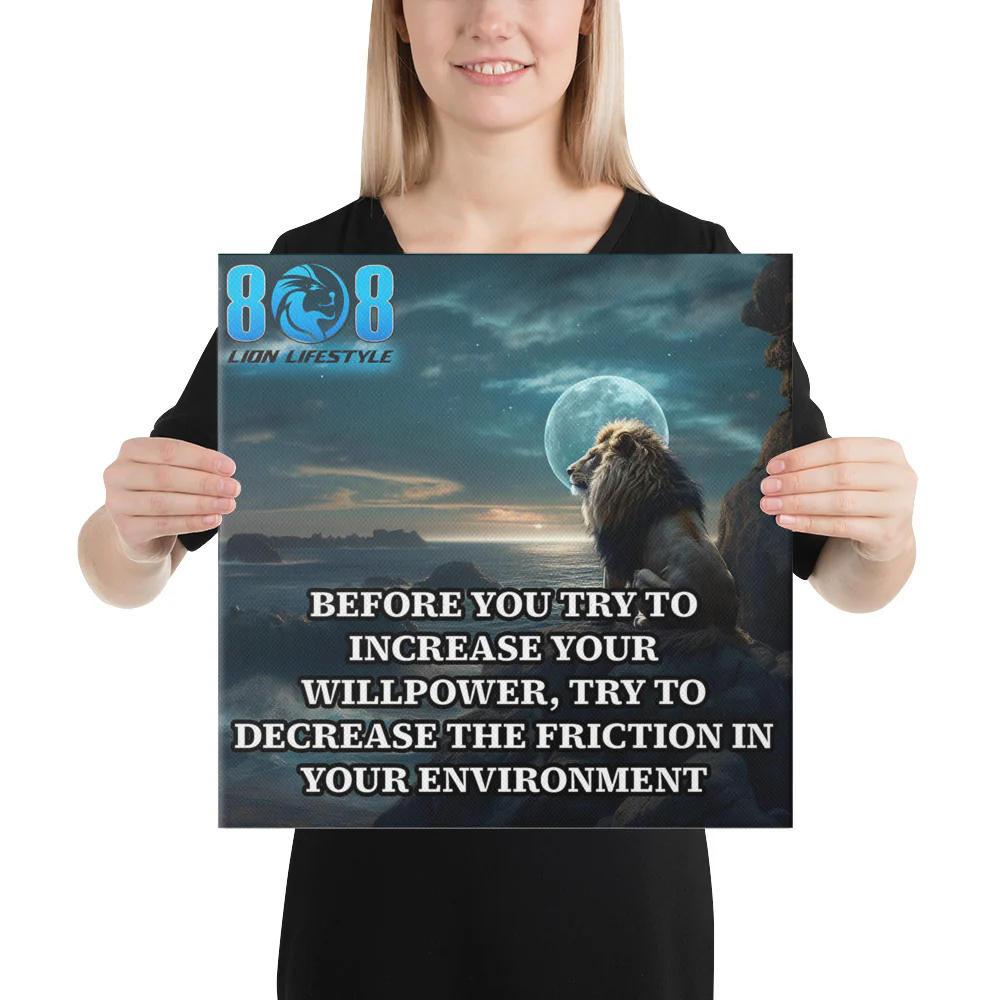
Decrease Friction Canvas
$55.55
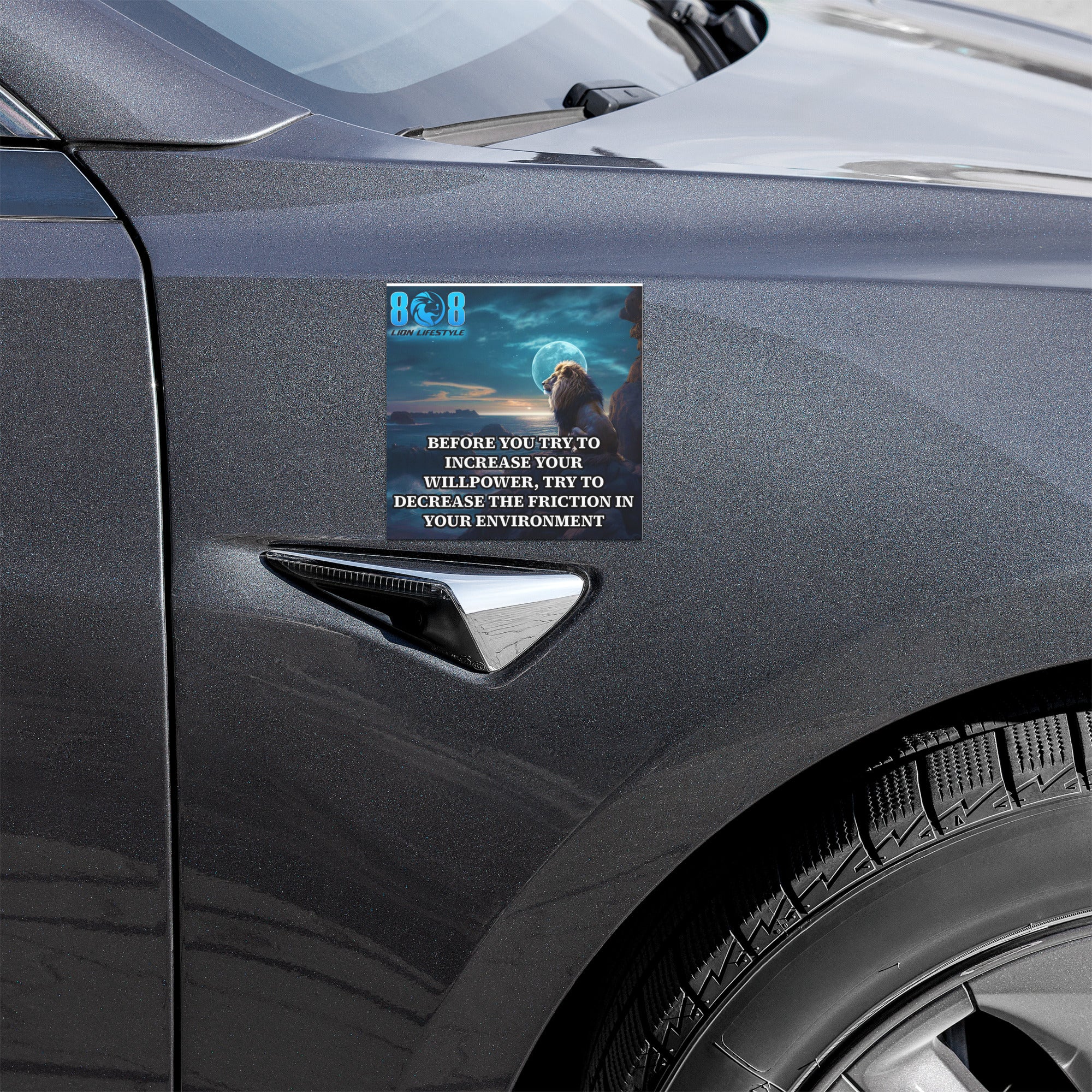
Decrease Friction Car Magnet
$7.77
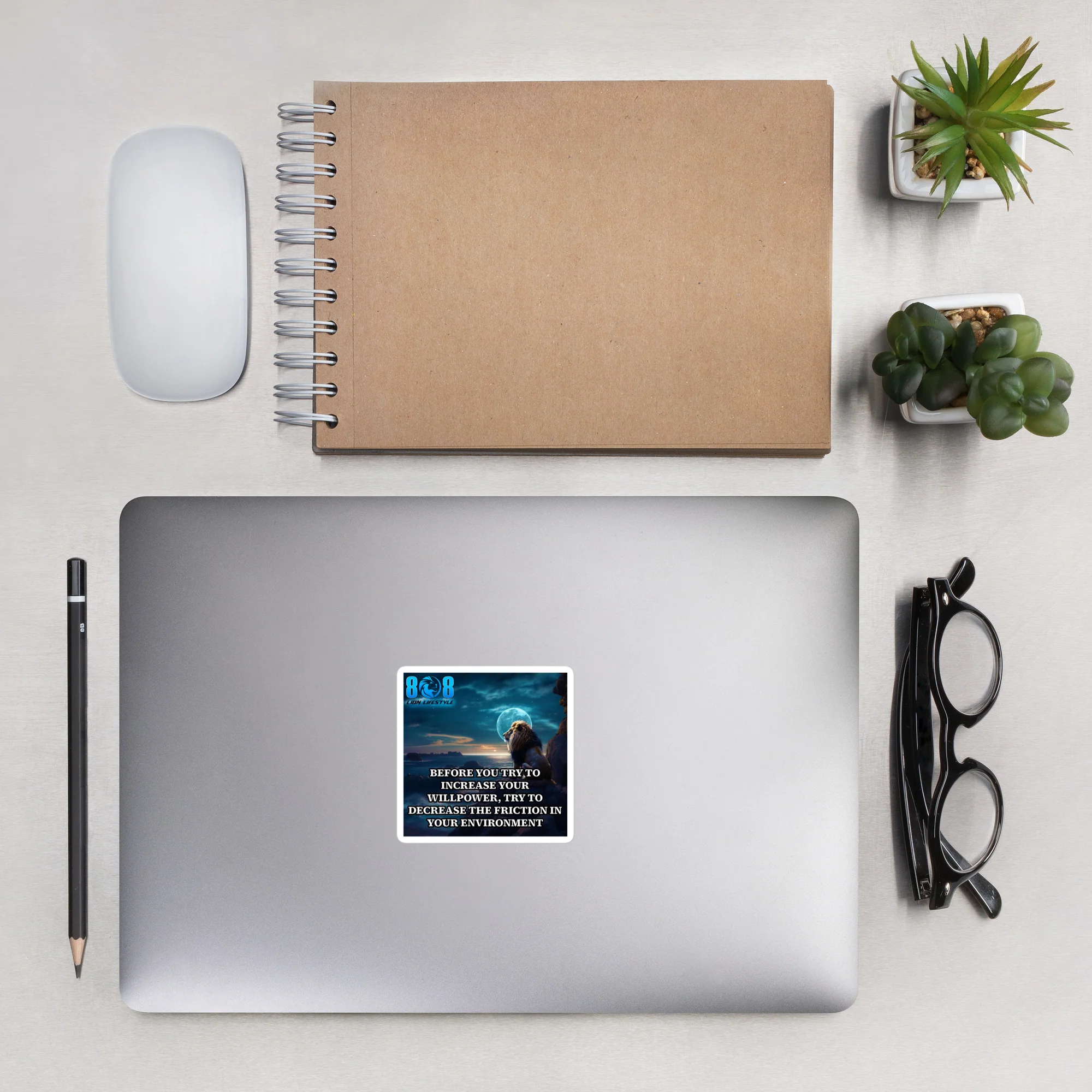
Decrease Friction Sticker
$6.95